


+91-9995829239

aravindjjofficial@gmail.com

Get In Touch
Have a project in mind or just want to say hi? I’d love to hear from you!

A Unified Digital Ecosystem for EV Ownership
Matter Motors
Lead UI/UX Designer
Overview
Matterverse is the companion app for Matter Motors’ electric motorcycles, designed to connect users with their vehicle, ownership services, and the brand through a single, cohesive experience. The challenge was to bring together complex and diverse features without overwhelming users.
Platform
Mobile
Role
Lead UI/UX Designer
Platform
Mobile
Scope
End-to-end UX strategy and product design
The Problem
Multiple opportunities—vehicle controls, ownership services, and brand engagement—were emerging in parallel. The core challenge was:
How do we combine fundamentally different feature sets into one app while keeping the experience clear, intuitive, and scalable?
This was less a UI problem and more an experience architecture and prioritization challenge.

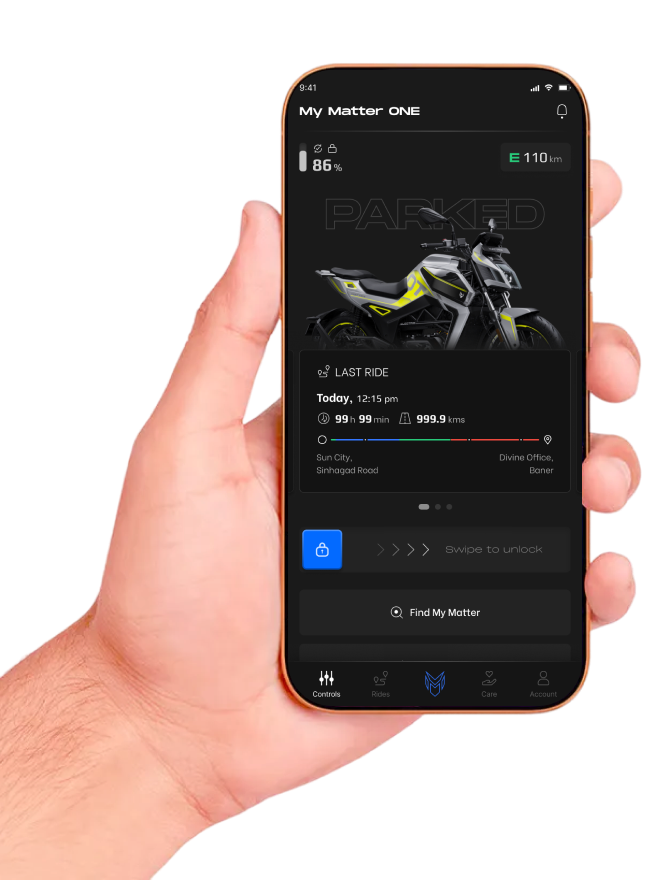
My Role
The role focused on driving UX strategy and product design by framing core problems and establishing a scalable information architecture. By streamlining user flows and maintaining a cohesive design system, the design process remained closely aligned with product and engineering goals. This collaborative approach was supported through team mentorship and active involvement in the end-to-end release cycle.
Experience Strategy
To manage complexity, the design architecture adopted a three-space experience model:
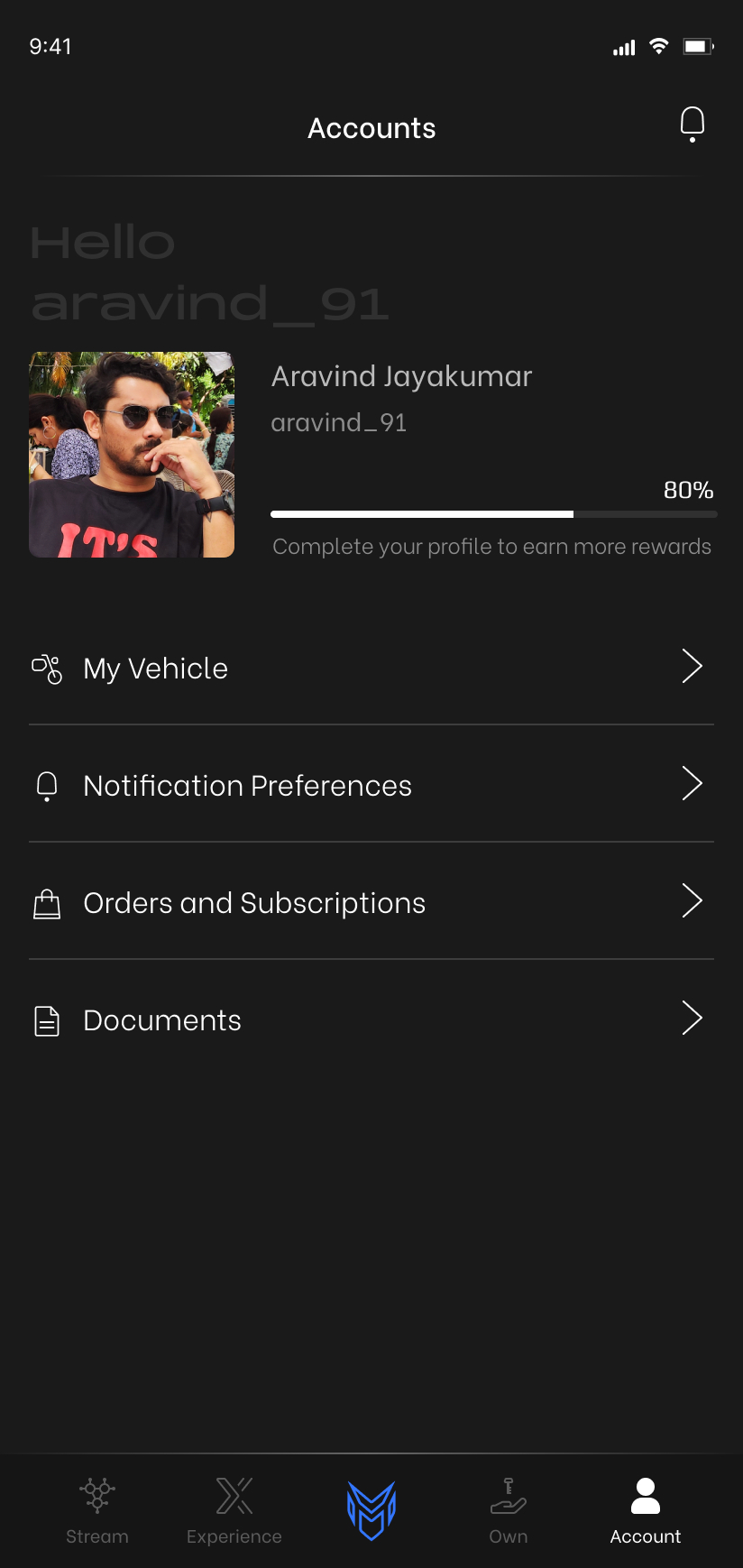
A contextual Space Switch was implemented to allow for seamless transitions between these areas without losing user orientation. This structural framework ultimately served as the foundation for all subsequent design decisions, ensuring a clear and scalable user experience.
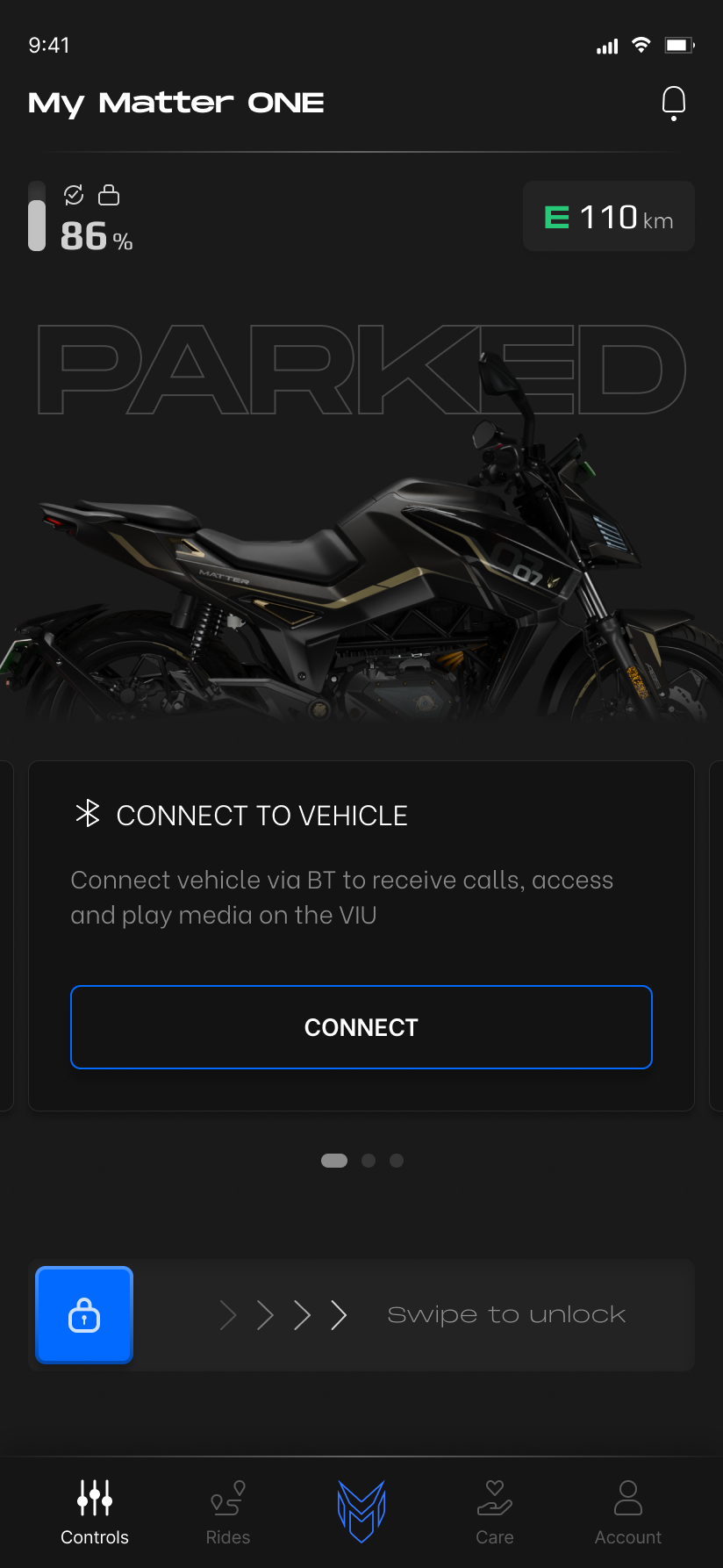
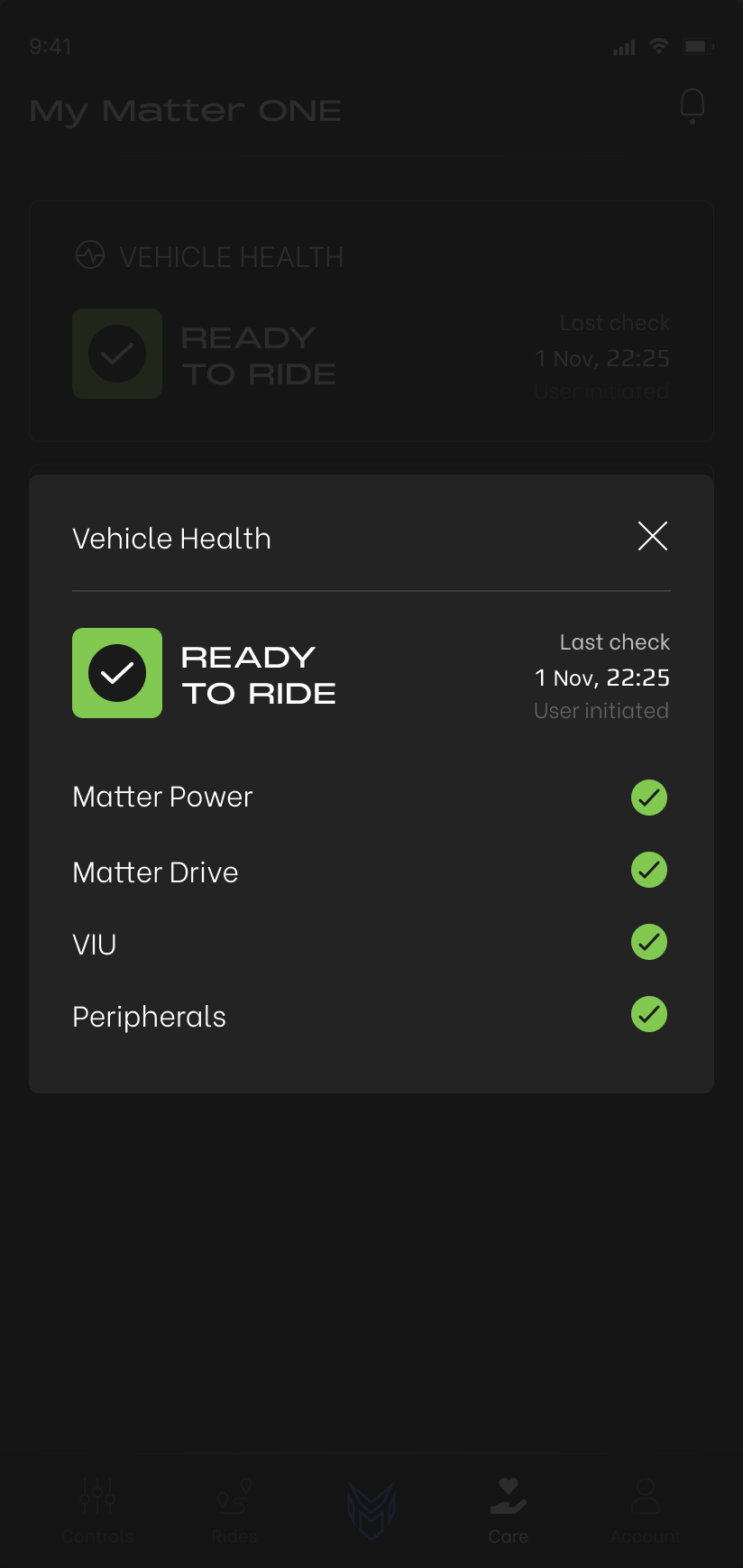
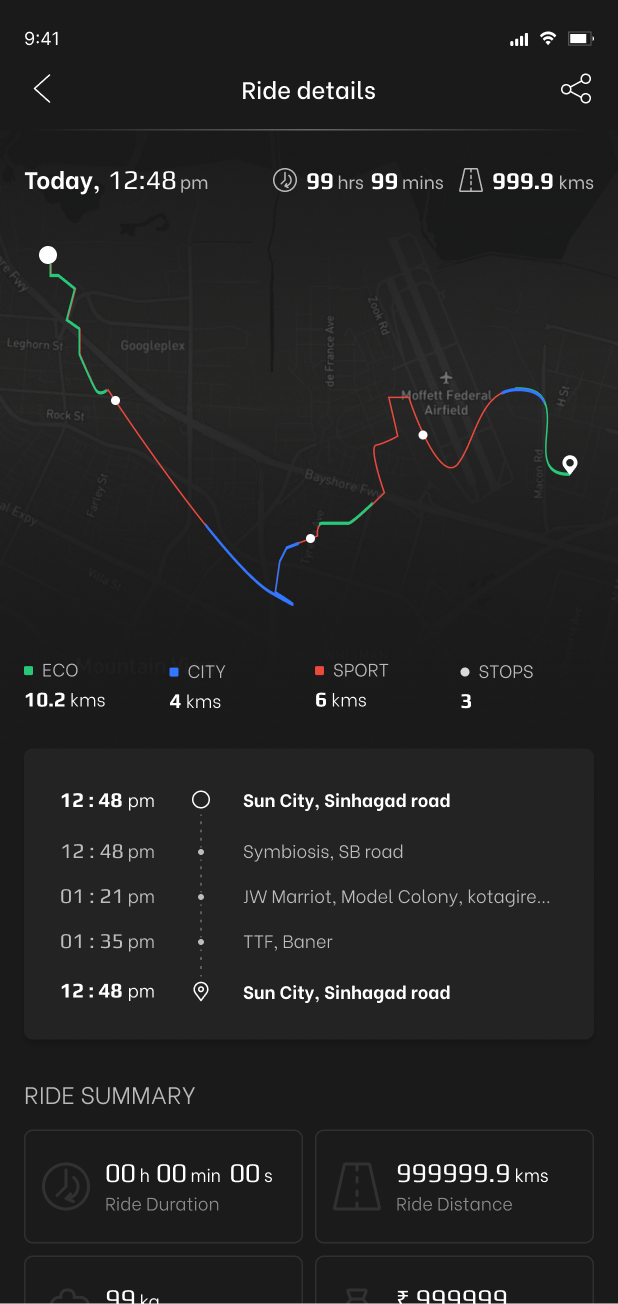
Product – Vehicle controls, ride data, health, and performance
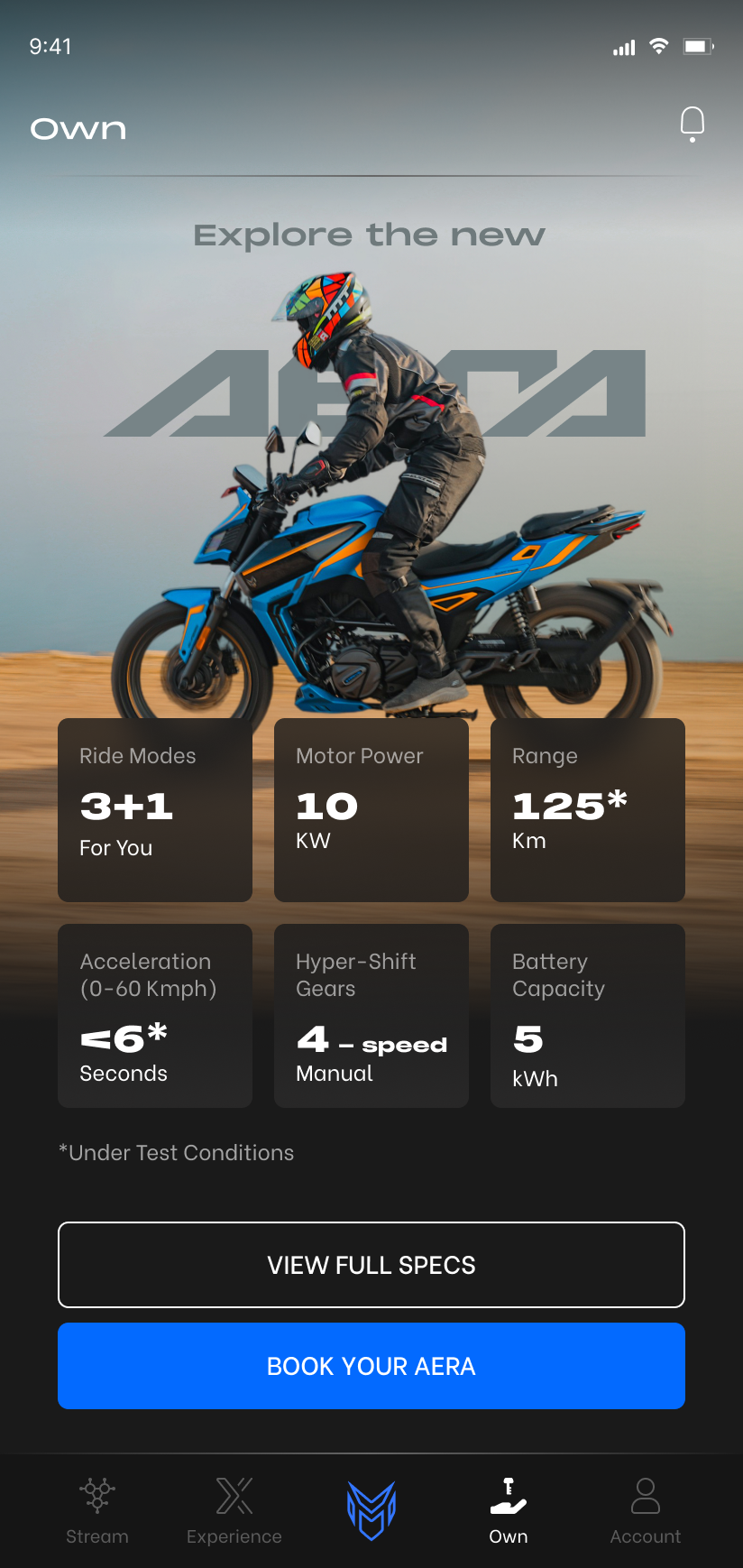
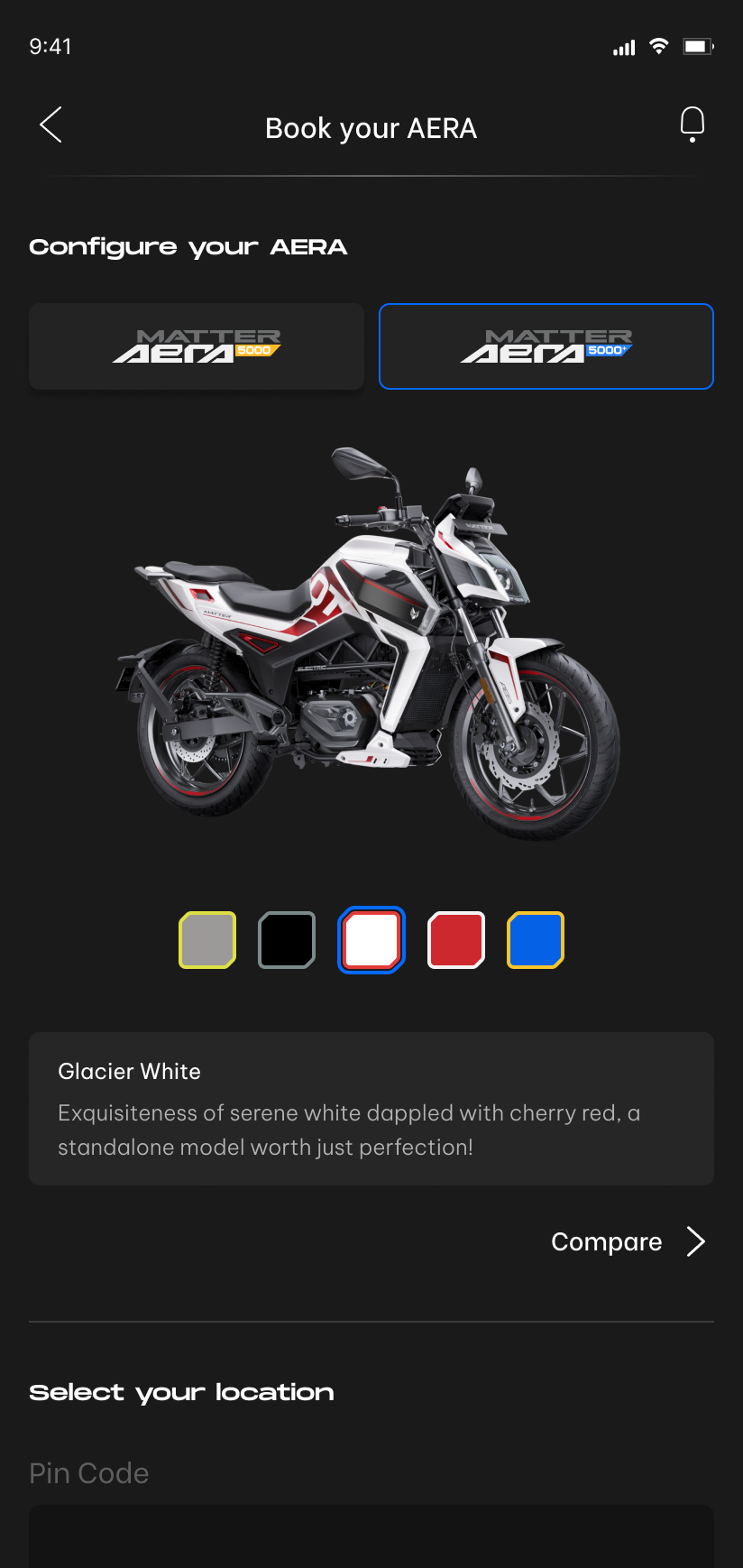
Ownership – Test rides booking, vehicle booking, and configuration
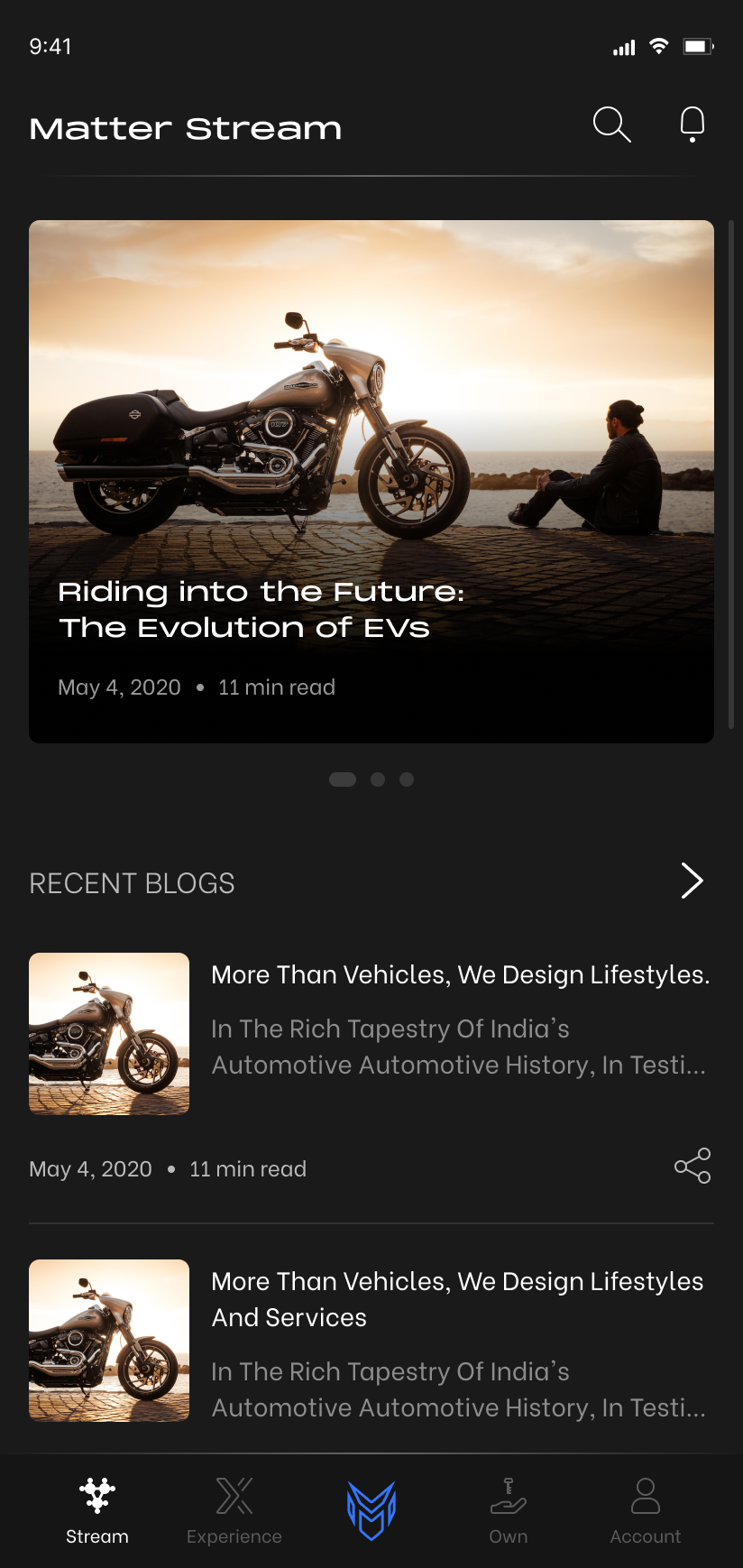
Engagement – Brand updates and content
Key Design Decisions
Clear separation of intent
to prevent feature overload
Progressive disclosure
for advanced controls and data
Consistent navigation patterns
across spaces
Modular architecture
to support future features
Execution
Close alignment with product and engineering teams ensured that scope and technical feasibility—particularly for real-time vehicle data—remained balanced throughout development. A shared design system further supported this collaboration, maintaining visual and interaction consistency as the product scaled.
Outcome
- Delivered a unified, scalable app connecting product, ownership, and engagement
- Reduced cognitive load while supporting complex functionality
- Established a strong foundation for future EV products and services
- Reinforced Matter Motors’ positioning as a technology-driven EV brand
Takeaways
Designing Matterverse emphasized the importance of experience architecture in complex products. Structuring the app around user intent helped manage complexity, while early engineering collaboration ensured feasibility in a hardware-connected ecosystem. Treating the app as a growing platform—not a feature container—allowed the experience to scale with both the product and the brand.
Key Screens
Key Screens

Experience
Works
Blogs
Testimonials


Get In Touch
Have a project in mind or just want to say hi? I’d love to hear from you!
+91-9995829239
aravindjjofficial@gmail.com
A Unified Digital Ecosystem for EV Ownership
Matter Motors
Lead UI/UX Designer
Overview
Matterverse is the companion app for Matter Motors’ electric motorcycles, designed to connect users with their vehicle, ownership services, and the brand through a single, cohesive experience. The challenge was to bring together complex and diverse features without overwhelming users.
Role
Lead UI/UX Designer
Platform
Mobile
Scope
End-to-end UX strategy and product design
The Problem
Multiple opportunities—vehicle controls, ownership services, and brand engagement—were emerging in parallel. The core challenge was:
How do we combine fundamentally different feature sets into one app while keeping the experience clear, intuitive, and scalable?
This was less a UI problem and more an experience architecture and prioritization challenge.
My Role
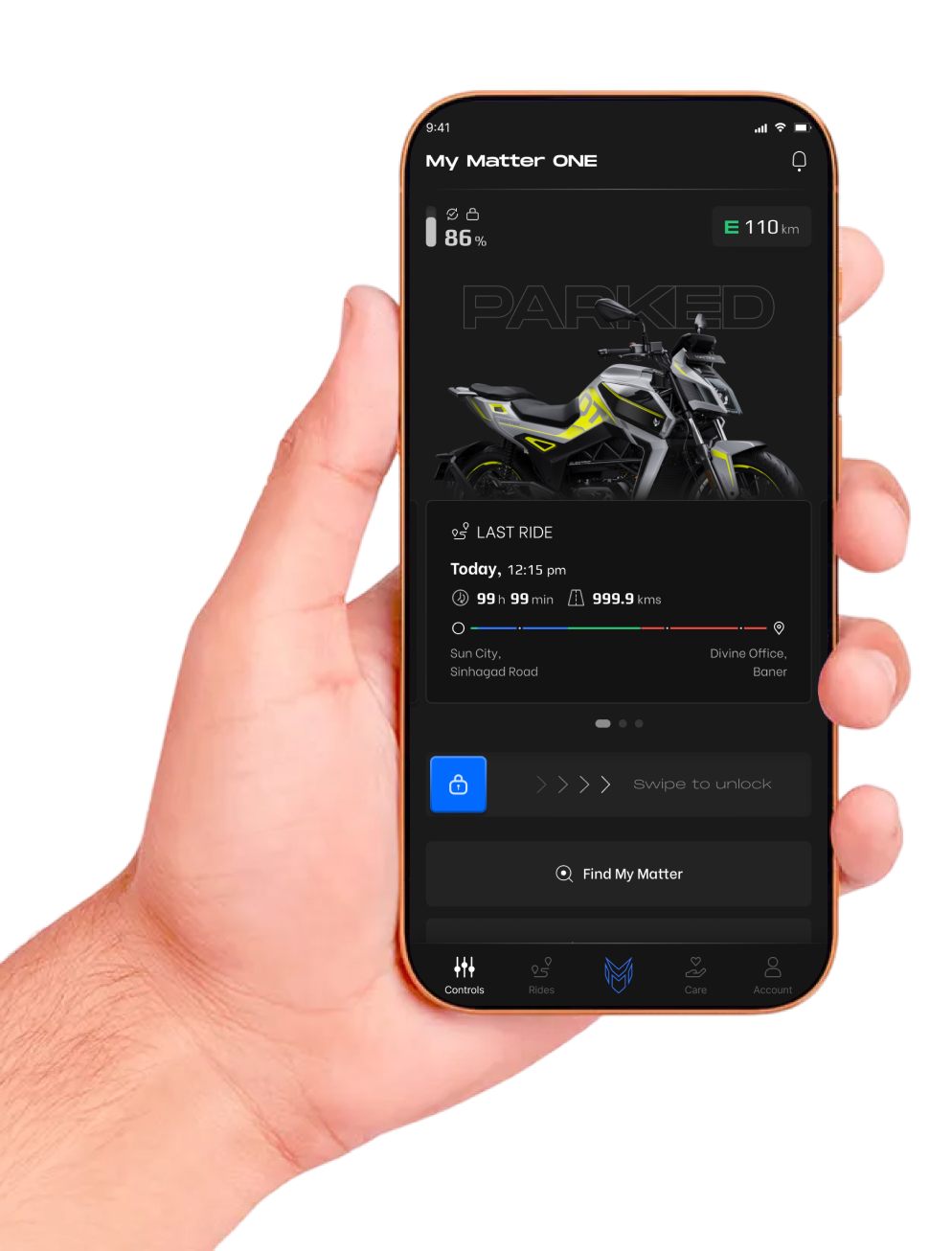
The role focused on driving UX strategy and product design by framing core problems and establishing a scalable information architecture. By streamlining user flows and maintaining a cohesive design system, the design process remained closely aligned with product and engineering goals. This collaborative approach was supported through team mentorship and active involvement in the end-to-end release cycle.
Experience Strategy
To manage complexity, the design architecture adopted a three-space experience model:
Product – Vehicle controls, ride data, health, and performance
Ownership – Test rides booking, vehicle booking, and configuration
Engagement – Brand updates and content
A contextual Space Switch was implemented to allow for seamless transitions between these areas without losing user orientation. This structural framework ultimately served as the foundation for all subsequent design decisions, ensuring a clear and scalable user experience.
Key Design Decisions
Clear separation of intent
to prevent feature overload
Progressive disclosure
for advanced controls and data
Consistent navigation patterns
across spaces
Modular architecture
to support future features
Execution
Close alignment with product and engineering teams ensured that scope and technical feasibility—particularly for real-time vehicle data—remained balanced throughout development. A shared design system further supported this collaboration, maintaining visual and interaction consistency as the product scaled.
Outcome
- Delivered a unified, scalable app connecting product, ownership, and engagement
- Reduced cognitive load while supporting complex functionality
- Established a strong foundation for future EV products and services
- Reinforced Matter Motors’ positioning as a technology-driven EV brand
Takeaways
Designing Matterverse emphasized the importance of experience architecture in complex products. Structuring the app around user intent helped manage complexity, while early engineering collaboration ensured feasibility in a hardware-connected ecosystem. Treating the app as a growing platform—not a feature container—allowed the experience to scale with both the product and the brand.
Key Screens
Experience
Works
Blogs
Testimonials


Get In Touch
Have a project in mind or just want to say hi? I’d love to hear from you!
+91-9995829239
aravindjjofficial@gmail.com
A Unified Digital Ecosystem for EV Ownership
Matter Motors
Lead UI/UX Designer
Overview
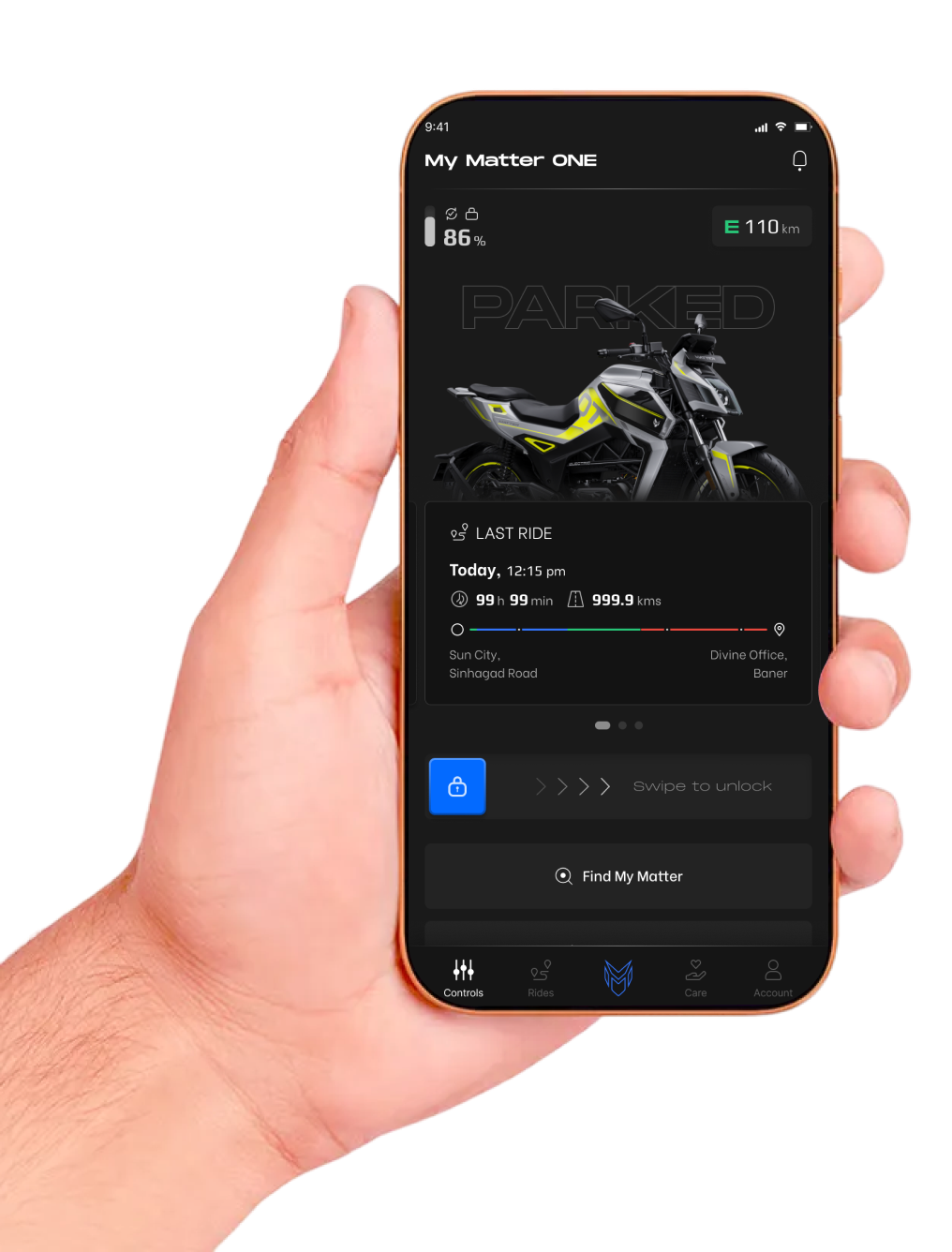
Matterverse is the companion app for Matter Motors’ electric motorcycles, designed to connect users with their vehicle, ownership services, and the brand through a single, cohesive experience. The challenge was to bring together complex and diverse features without overwhelming users.
Role
Lead UI/UX Designer
Platform
Mobile
Scope
End-to-end UX strategy and product design
The Problem
Multiple opportunities—vehicle controls, ownership services, and brand engagement—were emerging in parallel. The core challenge was:
This was less a UI problem and more an experience architecture and prioritization challenge.
How do we combine fundamentally different feature sets into one app while keeping the experience clear, intuitive, and scalable?
The role focused on driving UX strategy and product design by framing core problems and establishing a scalable information architecture. By streamlining user flows and maintaining a cohesive design system, the design process remained closely aligned with product and engineering goals. This collaborative approach was supported through team mentorship and active involvement in the end-to-end release cycle.
My Role
Experience Strategy
To manage complexity, the design architecture adopted a three-space experience model:
Product – Vehicle controls, ride data, health, and performance
Ownership – Test rides booking, vehicle booking, and configuration
Engagement – Brand updates and content
A contextual Space Switch was implemented to allow for seamless transitions between these areas without losing user orientation. This structural framework ultimately served as the foundation for all subsequent design decisions, ensuring a clear and scalable user experience.
Key Design Decisions
Clear separation of intent
to prevent feature overload
Progressive disclosure
for advanced controls and data
Consistent navigation patterns
across spaces
Modular architecture
to support future features
Execution
Close alignment with product and engineering teams ensured that scope and technical feasibility—particularly for real-time vehicle data—remained balanced throughout development. A shared design system further supported this collaboration, maintaining visual and interaction consistency as the product scaled.
Outcome
- Delivered a unified, scalable app connecting product, ownership, and engagement
- Reduced cognitive load while supporting complex functionality
- Established a strong foundation for future EV products and services
- Reinforced Matter Motors’ positioning as a technology-driven EV brand
Takeaways
Designing Matterverse emphasized the importance of experience architecture in complex products. Structuring the app around user intent helped manage complexity, while early engineering collaboration ensured feasibility in a hardware-connected ecosystem. Treating the app as a growing platform—not a feature container—allowed the experience to scale with both the product and the brand.

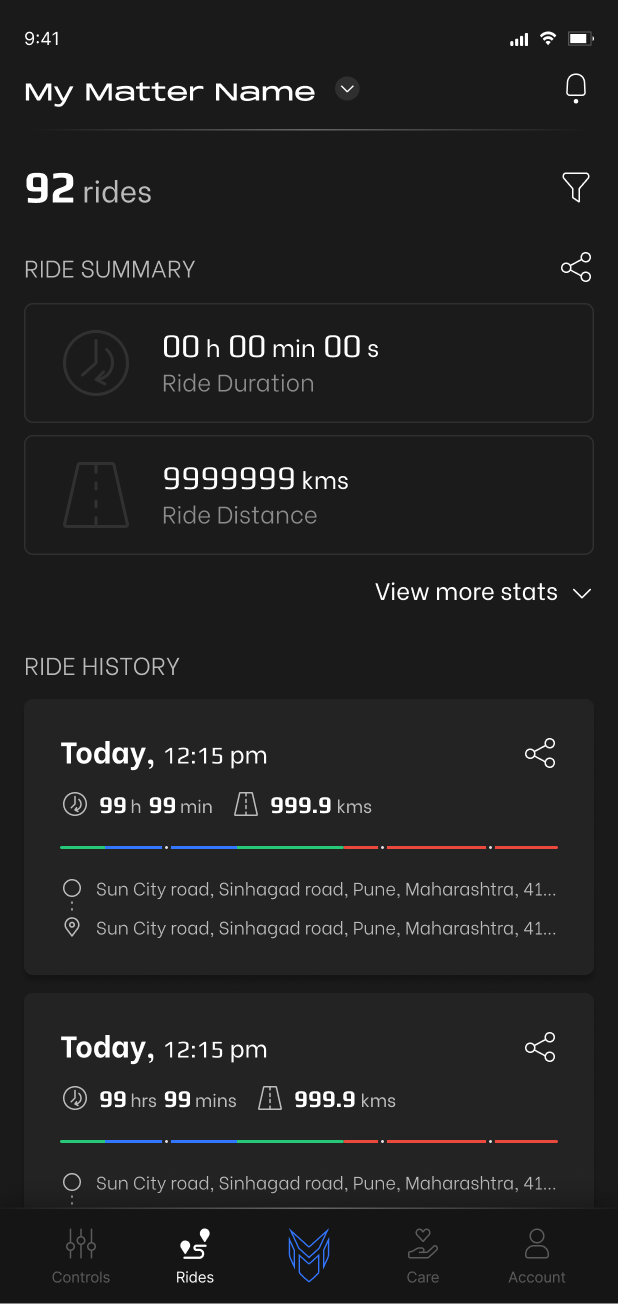
Key Screens